
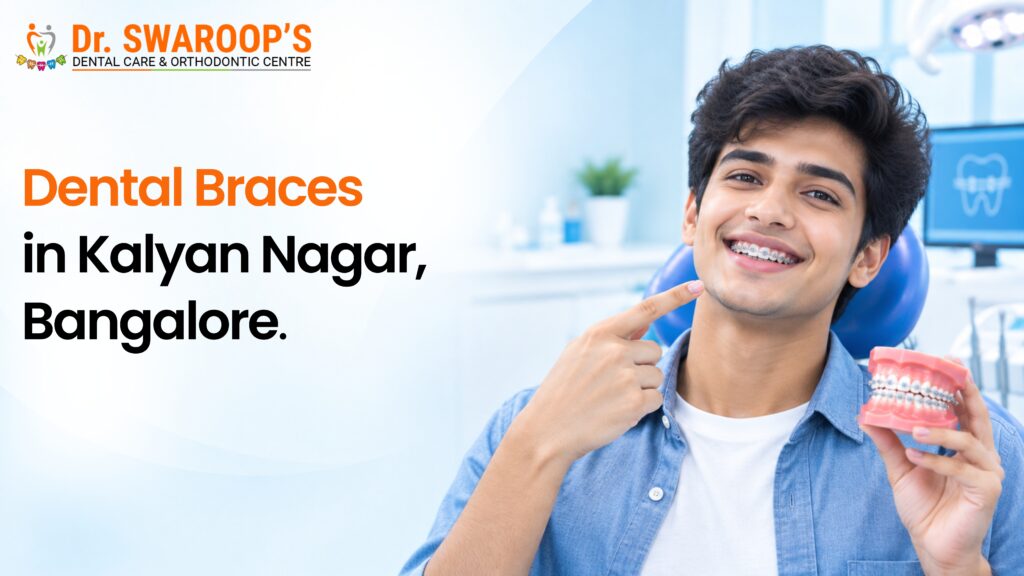
A healthy, well-aligned smile can improve not only your appearance but also your oral health, chewing efficiency, speech, and confidence. However, crooked teeth, overcrowding, gaps, overbites, underbites, and other alignment concerns are common at different ages. Dental braces offer a reliable and proven way to gradually move teeth into healthier positions and create a balanced bite.
Modern orthodontics has evolved significantly, giving patients several choices beyond traditional metal braces. Depending on your dental condition, lifestyle, age, aesthetic preferences, and budget, an orthodontist may recommend metal braces, ceramic braces, self-ligating braces, or other orthodontic solutions.
If you are considering braces, understanding the types of dental braces, their benefits, treatment process, and expected cost in Bangalore can help you make a more informed decision.
What Are Dental Braces?
Dental braces are orthodontic appliances designed to apply controlled pressure to teeth over time. This pressure gradually guides teeth into their desired positions while helping correct problems with the bite and alignment of the jaws.
Braces generally consist of brackets attached to the teeth and an archwire that connects them. Periodic adjustments allow the orthodontist to control the direction and amount of tooth movement.
Depending on the complexity of the case, braces may be used to address:
- Crowded or overlapping teeth
- Gaps between teeth
- Protruding teeth
- Overbite and underbite
- Crossbite
- Open bite
- Incorrect tooth alignment
- Certain functional bite problems
The objective is not simply to make teeth look straight. Proper orthodontic treatment aims to create a stable, functional bite that supports long-term oral health.
Why Consider Dental Braces in Kalyan Nagar, Bangalore?
Choosing dental braces in Bangalore can be particularly useful when you want regular orthodontic appointments close to home or work. Since braces typically require periodic monitoring, convenience can make it easier to maintain your treatment schedule.
More importantly, your choice should be based on the orthodontist’s experience, diagnosis, treatment planning, technology used, expected results, and overall quality of care rather than location alone.
Types of Dental Braces Available
There is no single type of braces that is ideal for everyone. Your orthodontist will evaluate your teeth and bite before recommending an appropriate option.
| Type of Braces | Appearance | Key Advantage | Typical Suitability |
| Metal Braces | Visible | Durable and effective | Most orthodontic cases |
| Ceramic Braces | Tooth-coloured | More discreet | Teens and adults |
| Self-Ligating Braces | Visible/discreet options | Designed for efficient wire management | Selected cases |
| Lingual Braces | Hidden behind teeth | Highly discreet | Suitable cases with specific requirements |
1. Traditional Metal Braces
Traditional metal braces remain one of the most commonly used orthodontic treatments. They use metal brackets and wires to gradually reposition teeth.
They are durable, versatile, and suitable for many mild, moderate, and complex alignment problems. Their affordability also makes them a popular choice for patients looking for effective orthodontic treatment.
2. Ceramic Braces
Ceramic braces work on principles similar to conventional braces but use tooth-coloured or translucent brackets. This makes them less noticeable.
They are particularly popular among adults and older teenagers who want fixed braces while maintaining a more discreet appearance.
3. Self-Ligating Braces
Self-ligating braces use specially designed brackets that hold the archwire without conventional elastic ligatures. Depending on the case, this design may make certain aspects of orthodontic treatment more convenient.
However, self-ligating braces are not automatically better for every patient. The treatment system should be selected according to your individual orthodontic requirements.
4. Lingual Braces
Lingual braces are positioned on the inner surfaces of the teeth, making them difficult to see from the outside. They can provide a highly discreet fixed-brace option.
Because they require specialized placement and may take some time to adjust to, they are generally considered after evaluating the patient’s teeth, bite, and expectations.
Benefits of Dental Braces
The benefits of orthodontic treatment go beyond achieving a straighter smile.
Improved Smile Appearance
Straightening misaligned teeth can create a more balanced and attractive smile. This can also improve confidence in social and professional situations.
Better Oral Hygiene
Crowded and overlapping teeth can create difficult-to-clean areas where plaque accumulates. Aligning the teeth can make brushing and flossing more manageable.
Improved Bite Function
Braces can help correct bite discrepancies, allowing the upper and lower teeth to meet more appropriately. This may improve chewing efficiency and overall dental function.
Reduced Risk of Certain Dental Problems
Severely misaligned teeth can experience uneven forces and excessive wear. Correcting the alignment may help distribute biting forces more appropriately.
Long-Term Oral Health
A properly aligned dentition can support easier cleaning and contribute to maintaining healthy teeth and gums when combined with good oral hygiene and regular dental check-ups.
Who Can Get Dental Braces?
Dental braces are not limited to children and teenagers. Adults can also undergo orthodontic treatment if their teeth and gums are sufficiently healthy.
Children may benefit from an orthodontic evaluation when permanent teeth begin to develop and bite or alignment concerns become noticeable. In some cases, early intervention can help guide developing dental structures.
For adults, the orthodontist will consider factors such as gum health, existing restorations, bone support, tooth condition, and the complexity of the bite before creating a treatment plan.
Dental Braces Treatment Process
Understanding the treatment journey can make the experience less intimidating.
Step 1: Orthodontic Consultation
The process begins with a detailed examination. Your orthodontist may assess your facial profile, teeth, bite, jaw relationship, and overall oral health.
Step 2: Diagnostic Records
Depending on your case, dental photographs, X-rays, digital scans, or impressions may be required. These records help the orthodontist understand tooth positioning and plan treatment accurately.
Step 3: Personalized Treatment Plan
Your orthodontist will explain the recommended braces, expected treatment duration, possible alternatives, and approximate cost.
Step 4: Braces Placement
Once the treatment plan is finalized, brackets are bonded to the teeth and the orthodontic wire is placed. The procedure generally does not require major dental surgery.
Step 5: Regular Adjustments
Follow-up appointments are important because teeth need controlled, gradual movement. The orthodontist may adjust wires, replace components, or modify the treatment plan when necessary.
Step 6: Braces Removal and Retention
After the desired tooth movement is achieved, the braces are removed. Retainers are then prescribed to help maintain the corrected positions.
Retention is an essential part of orthodontic treatment because teeth can naturally shift after braces are removed.
How Much Do Dental Braces Cost in Bangalore?
The cost of dental braces in Kalyan Nagar, Bangalore varies from patient to patient. There is no single fixed price because orthodontic treatment depends on several factors.
The type of braces is one of the major considerations. Traditional metal braces are generally more economical, while ceramic, lingual, and specialized orthodontic systems may cost more.
Other factors include the complexity of tooth movement, treatment duration, diagnostic procedures, orthodontist’s expertise, follow-up requirements, and whether additional dental procedures are necessary.
A consultation is therefore the best way to receive an individualized estimate rather than relying solely on online price ranges.
How Long Does Braces Treatment Take?
The duration of orthodontic treatment varies considerably. Many cases take around 12 to 24 months, but simpler cases may require less time, while complex cases can take longer.
Treatment duration can be influenced by:
- Severity of crowding or bite problems
- Age and individual tooth movement
- Type of orthodontic appliance
- Patient compliance
- Missed appointments
- Oral hygiene
- Complexity of the treatment plan
Following your orthodontist’s instructions and attending scheduled appointments can help keep treatment on track.
Caring for Your Teeth During Braces Treatment
Maintaining excellent oral hygiene is especially important when wearing braces. Food particles can become trapped around brackets and wires, increasing the risk of plaque accumulation.
Brush carefully around brackets and along the gumline. Flossing or using orthodontic cleaning aids can help clean areas that a toothbrush cannot easily reach.
It is also wise to avoid excessively hard, sticky, or chewy foods that could damage orthodontic components. If a bracket or wire becomes loose or uncomfortable, contact your dental provider rather than attempting to fix it yourself.
Why Choose Professional Orthodontic Care?
Braces involve controlled biological tooth movement, so treatment should be planned and monitored by a qualified dental professional. A thorough diagnosis is essential before deciding which orthodontic system to use.
A good orthodontic treatment plan considers not only how the teeth look but also how they function together. At Swaroops Dental, patients can discuss their alignment concerns, treatment options, expected duration, and suitability for different types of braces as part of a personalized dental evaluation. The right treatment is ultimately the one that addresses your orthodontic needs while fitting your aesthetic expectations, lifestyle, and budget
A straighter smile begins with understanding what is causing your dental alignment concerns and choosing a treatment plan designed specifically for you. Whether you are considering traditional metal braces, ceramic braces, self-ligating braces, or another orthodontic solution, a professional evaluation can help you understand your options.
If you are searching for dental braces in Kalyan Nagar, Bangalore, consider scheduling an orthodontic consultation to discuss your teeth, bite, expected treatment timeline, and cost. With the right diagnosis, consistent care, and proper retention, orthodontic treatment can help you achieve a healthier and more confident smile.
Swaroops Dental can be considered as a starting point for discussing your orthodontic concerns and exploring suitable treatment options based on your individual needs.
FAQs
1. Are dental braces painful?
Braces are generally not considered painful, although some patients experience mild soreness or pressure after braces are placed or adjusted. This usually settles as the mouth adapts.
2. Can adults get braces?
Yes. Adults can receive orthodontic treatment if their teeth, gums, and supporting structures are healthy enough for treatment. An orthodontic evaluation can determine suitability.
3. What is the best type of dental braces?
There is no universally best option. Metal, ceramic, self-ligating, and lingual braces have different advantages. The appropriate choice depends on your dental condition, aesthetic preferences, budget, and orthodontist’s recommendation.
4. How much do braces cost in Bangalore?
The cost varies based on the type of braces, complexity of treatment, treatment duration, diagnostic requirements, and other factors. A personalized consultation is needed for an accurate estimate.
5. How long do I need to wear braces?
Many patients wear braces for approximately 12–24 months, although treatment can be shorter or longer depending on the complexity of the case and individual response.